
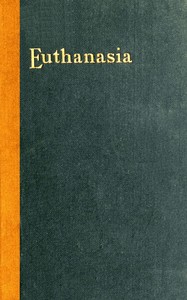
Euthanasia : or, Medical treatment in aid of an easy death by William Munk
Published in 1887, William Munk's Euthanasia is a short but profound book that feels like a conversation with a wise, experienced doctor. Forget the modern political firestorm around the word. Munk goes back to the Greek roots: eu (good) and thanatos (death). For him, 'euthanasia' simply means 'a quiet and easy death,' and he believes doctors have a sacred duty to provide it.
The Story
There's no plot in the traditional sense. Think of it as a guidebook, written from a lifetime of observation. Munk, a fellow of the Royal College of Physicians, structures his argument clearly. He first establishes that seeking an easy death is a natural, noble hope, not a moral failing. Then, he gets practical. The heart of the book is a list of 'rules' for attending physicians. He talks about the importance of a calm demeanor, honest (but gentle) communication with the patient and family, and managing the sickroom environment—light, noise, and who is allowed to visit. Most strikingly, he advocates for the careful, compassionate use of opiates like morphine not just to kill pain, but to relieve the 'mental distress' and suffering of a terminal patient, ensuring their final hours are peaceful.
Why You Should Read It
This book shook me with its quiet humanity. In an era we often think of as medically primitive, Munk's focus is intensely modern: patient comfort and dignity. He writes with a warmth that cuts through the formal Victorian prose. You can feel his frustration with doctors who see death as a professional failure and thus abandon the dying, and his deep empathy for families left frightened and helpless. Reading his sensible advice—like propping a patient up to ease breathing or ensuring they aren't disturbed by unnecessary noise—makes you realize how much basic human kindness gets lost in high-tech medicine. It reframes the entire 'end-of-life' conversation away from abstract rights and into the realm of practical compassion.
Final Verdict
This is a must-read for anyone interested in medical history, ethics, or the human side of healthcare. It's perfect for nurses, doctors, hospice workers, or anyone who has sat with a loved one at the end of life. It's also surprisingly accessible for general readers curious about how our ancestors faced mortality. Don't expect a thrilling narrative; expect a gentle, firm, and deeply moving manifesto for kindness. In under 100 pages, Munk offers a perspective on death that is less scary and more dignified than much of what we hear today. It's a small book with a very big heart.
This is a copyright-free edition. Enjoy reading and sharing without restrictions.
James Williams
1 month agoLooking at the bibliography alone, the structural organization allows for quick referencing of key points. Well worth the time invested in reading it.
Kevin Clark
1 year agoComprehensive and well-researched.
Christopher Hill
1 year agoBeautifully written.
Kimberly King
6 months agoI have to admit, the character development leaves a lasting impact. Definitely a 5-star read.



Elizabeth Taylor
6 months agoExtremely helpful for my current research project.