
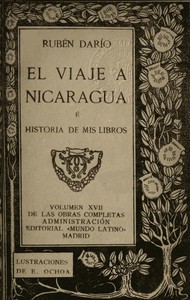
El Viaje a Nicaragua é Historia de mis libros by Rubén Darío
This book is split into two distinct parts. The first, El Viaje a Nicaragua, is exactly what it sounds like: Darío's account of his 1907 homecoming. After living in Chile and Europe for years, he returns as the most famous poet in the Spanish-speaking world. He describes the landscapes, the cities, the warmth of the people, and the complicated emotions of being a local hero who now feels like a bit of an outsider.
The Story
The travel section reads like a series of vivid postcards. Darío walks us through bustling streets and quiet countrysides, meeting everyone from old friends to political leaders. There's joy and nostalgia, but also sharp observations about social issues and the weight of expectation. The second part, Historia de mis libros, is where he gets personal. He doesn't just list his works; he tells us the stories behind them. What was he feeling when he wrote Azul...? What inspired the rhythms of Prosas Profanas? He connects the dots between his life experiences and the poems that made him famous, showing how his art was a response to the world around him.
Why You Should Read It
I loved this because it's so human. Darío isn't a distant statue here; he's a real person dealing with imposter syndrome, homesickness, and creative pressure. You get to see the man behind the monumental poetry. Reading his thoughts on returning home—that mix of pride and alienation—is something I think anyone who's ever moved away can understand. It also demystifies the creative process. Seeing how his surroundings and personal struggles directly fed into his revolutionary verses is incredibly inspiring.
Final Verdict
This is perfect for anyone curious about the person behind great art, or for readers who enjoy thoughtful travel writing with a psychological edge. You don't need to be a Darío expert to get a lot out of it. If you've ever wondered how an artist's birthplace and journeys shape their work, this is a fascinating, first-hand answer. It's a quiet, reflective book that offers a key to understanding one of literature's true giants.
Legal analysis indicates this work is in the public domain. Enjoy reading and sharing without restrictions.
Elizabeth Lee
2 months agoI decided to give this a try based on a colleague's recommendation, the visual layout and supporting data make the reading experience very smooth. The insights gained here are worth every minute of reading.
Margaret Brown
9 months agoIf you're tired of surface-level information, the logic behind each conclusion is easy to follow and verify. I feel much more confident in my knowledge after finishing this.
Jessica Jones
2 years agoComparing this to other titles in the same genre, the concise summaries at the end of each section are a lifesaver. A rare gem in a sea of mediocre content.
Thomas Martin
5 months agoVery satisfied with the depth of this material.



Jessica Jackson
2 months agoHaving followed this topic for years, I can say that the language used is precise without being overly academic or confusing. I feel much more confident in my knowledge after finishing this.